

From 24 – 27 November 2025, AIMS Ghana hosted a transformative Training Workshop on Mathematical Biology, welcoming emerging scientists, eager to explore the power of mathematical modelling in understanding complex biological systems. Held at the University of Ghana – IT Directorate, the four-day workshop was the second in a series supported by the Alexander von Humboldt Foundation through Prof. Nick Monk; the German Research Chair at AIMS Ghana.
Designed for participants interested in building knowledge in mathematical biology, the workshop introduced modern techniques for developing, analysing and simulating biological models. The programme blended expert-led lectures with hands-on computational sessions, giving attendees practical exposure to tools widely used in global research.

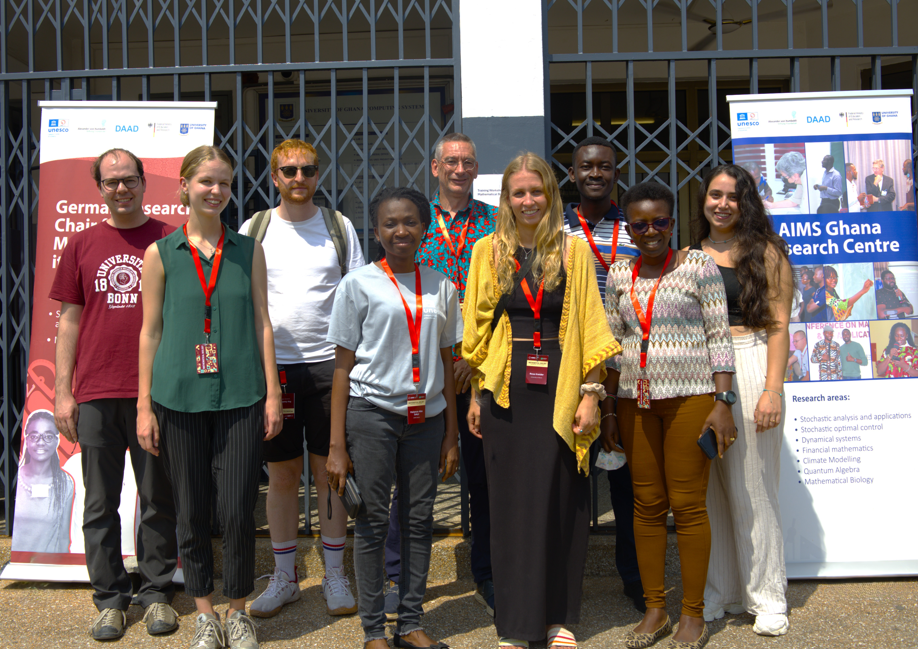
The academic organising team brought together a multinational group of mathematical biologists from Ghana, Germany, and the UK. Led by Prof. Nick Monk, the German Research Chair at AIMS Ghana, the team included Nissrin Alachkar, Roy Gusinow, Rosa Kreider, Joanna Schnorr, and Kilian Volmer. all from the University of Bonn as well as Nicholas Opoku, Gloria Botchway, Patience Aba Sakyi who are with the research team at AIMS Ghana. Their participation was made possible through a Research Cooperation Award from the German Academic Exchange Service (DAAD), enabling coordinated research visits that coincided with the workshop. The local organising committee also comprised; Mrs. Beauty Beatrice Kwawu, Sethlina Ocloo, Charlene Asiedu, Ohemaa Ateah and Daniel Nkrumah.
Interest in the workshop was strong: 118 applications were received, including 74 from Ghana-based applicants. In keeping with the workshop’s commitment to accessibility, participation was free of charge. After a competitive selection process, 32 participants from 11 institutions across Ghana were admitted, with women making up 41% of the cohort. Many participants were early-career researchers or life scientists eager to gain foundational skills in modelling.
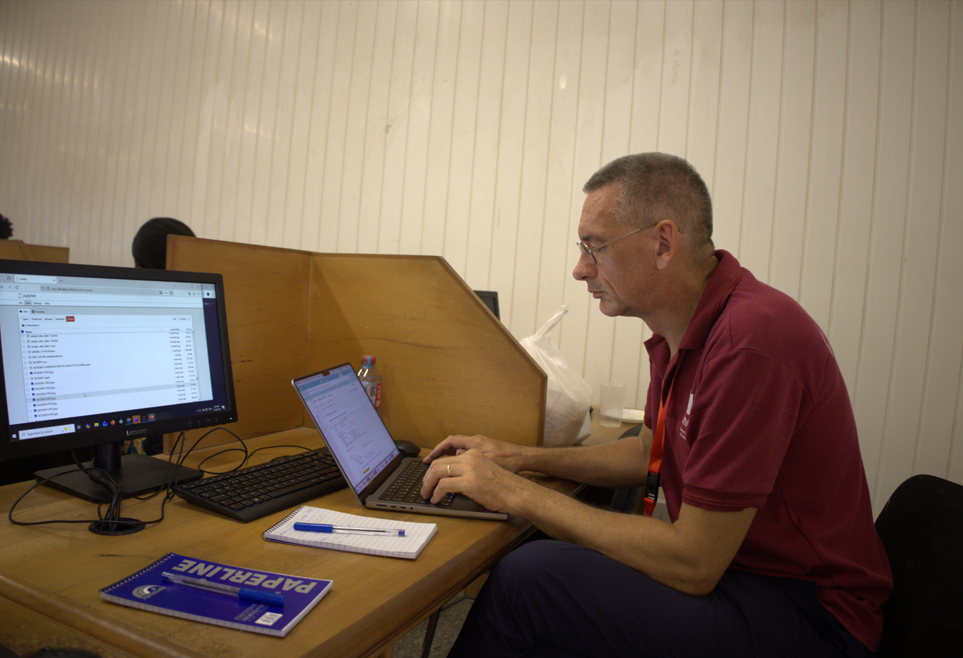
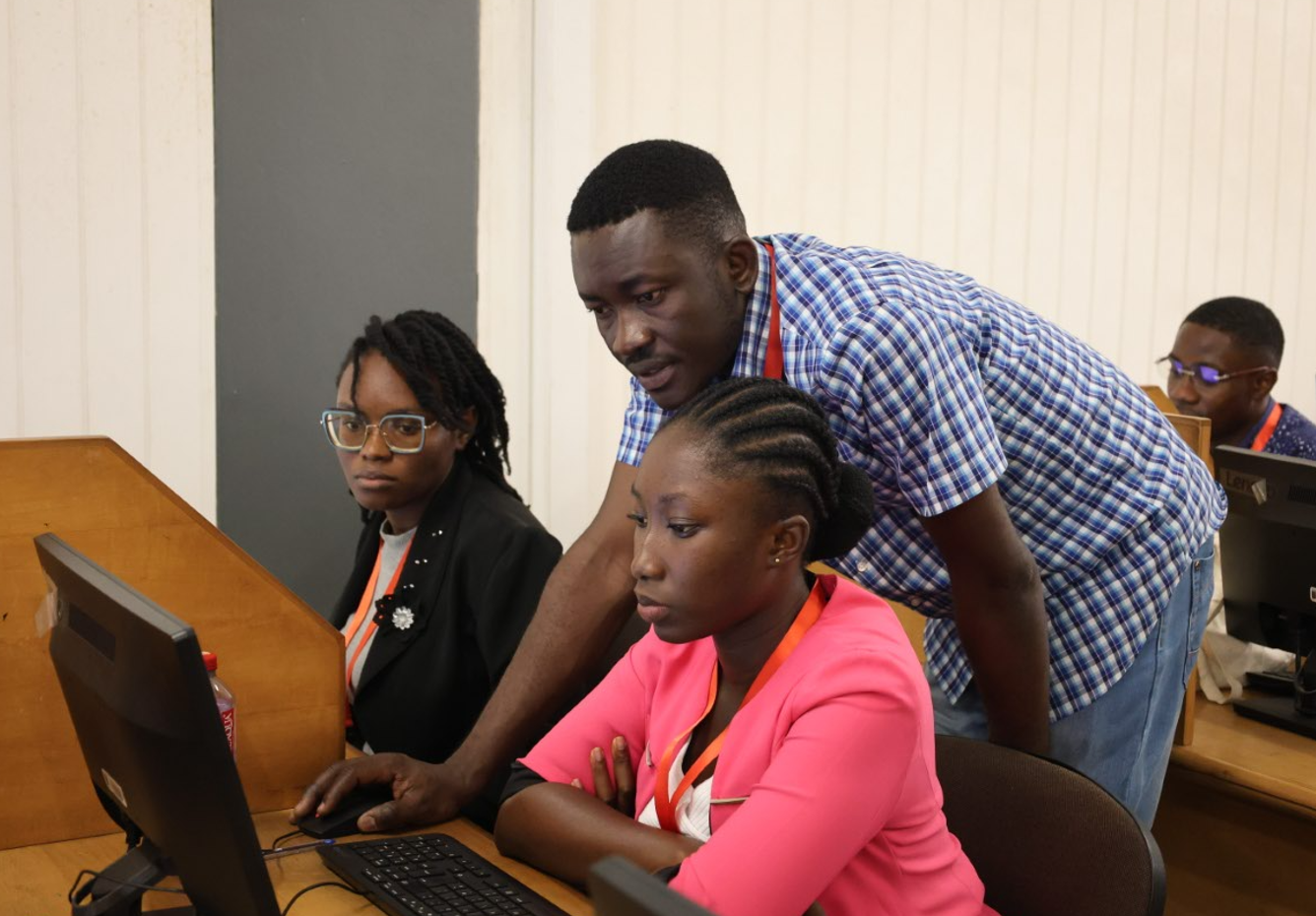
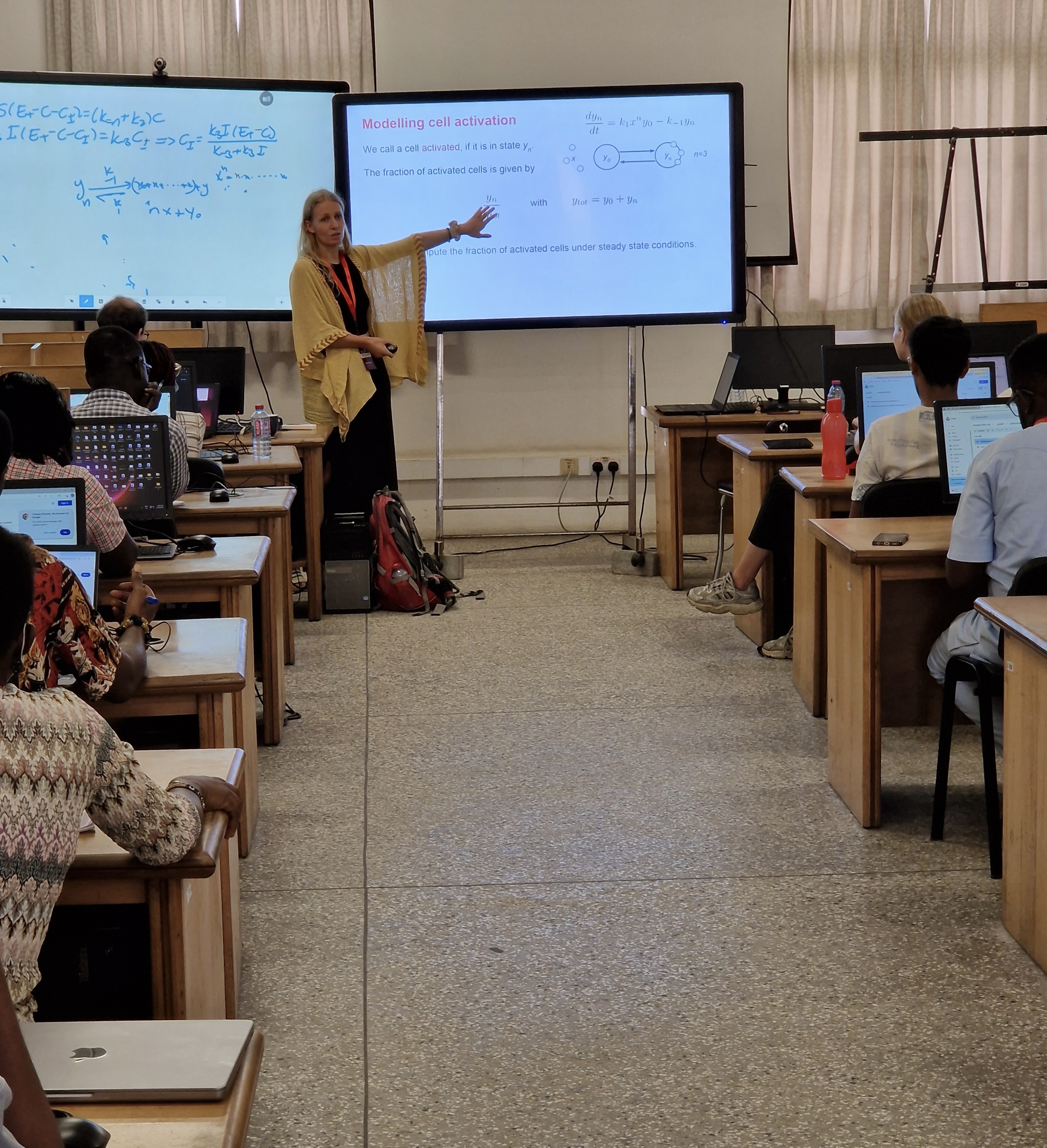
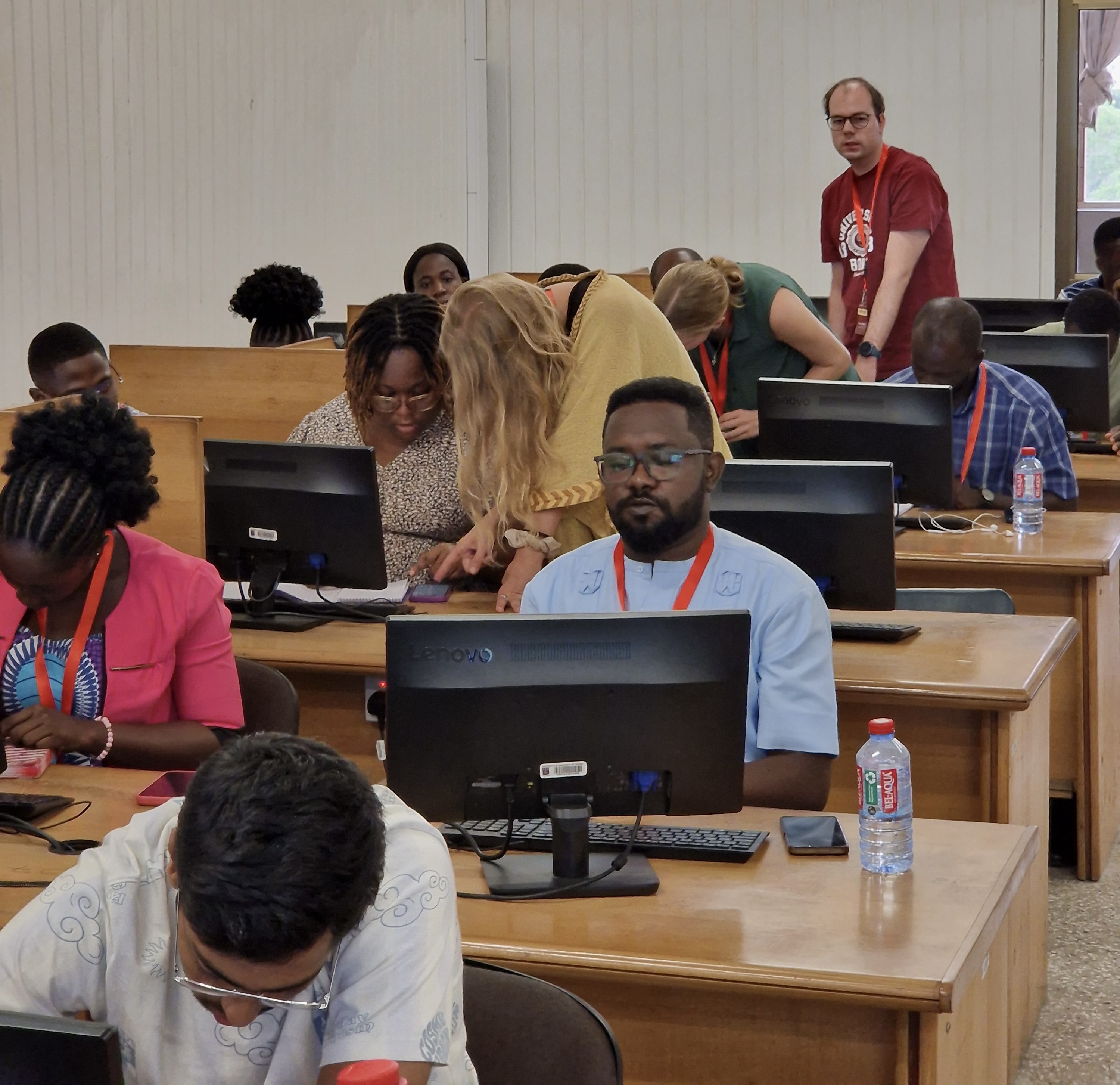
Each day featured four interactive teaching sessions. Participants used pre-prepared Jupyter notebooks and Python to explore real-world applications of mathematical biology. Topics included model development, immune system modelling using ordinary differential equations and agent-based modelling for infectious disease epidemiology. The final day was dedicated to group projects, where teams presented their analyses based on concepts learned throughout the workshop.
Beyond the classroom, the workshop fostered community and collaboration. Feedback from attendees was overwhelmingly positive, highlighting the workshop’s practical value and the supportive learning environment. Participants expressed enthusiasm for future opportunities to deepen their skills and engage in collaborative research.
The event marks another step forward in strengthening Ghana’s and Africa’s capacity in mathematical biology, empowering young scientists to tackle some of the continent’s most pressing health and environmental challenges.
 English